
Does Magnesium Help with Memory
Do you ever walk into a room and forget why you're there? Does someone's name escape you mid-conversation? Maybe you struggle to recall what you read just minutes ago? If these memory lapses are becoming more frequent, you might be wondering if you’re just getting older or whether a simple vitamin could make a difference.
Does magnesium help with memory? The short answer is yes! But not all magnesium supplements work the same way. In this blog, we'll explain the connection between magnesium and cognitive function, which forms actually reach your brain, and how to use this essential mineral to support your memory.
The Magnesium-Memory Connection
Your brain requires magnesium for hundreds of biochemical processes that directly affect memory and learning:
Synaptic Plasticity: Magnesium regulates the connections between brain cells (synapses) that store memories. These connections strengthen when you learn something new and weaken when memories fade. Adequate magnesium supports this plasticity essential for forming and retrieving memories.
Neurotransmitter Function: Magnesium influences neurotransmitters such as glutamate and GABA, which affect memory formation and recall. Without sufficient magnesium, these chemical messengers can't function optimally.
Brain Cell Communication: Magnesium helps regulate calcium flow in brain cells, which is critical for the electrical signals that allow neurons to communicate and store information.
Neuroprotection: This mineral helps protect brain cells from oxidative stress and inflammation that can damage memory centers like the hippocampus.
When brain magnesium levels drop, all these systems suffer—and memory often shows the effects first.
Can Low Magnesium Cause Forgetfulness?
Can low magnesium cause forgetfulness? Absolutely. Research suggests magnesium deficiency can impair both short-term and long-term memory through several mechanisms:
Reduced Synaptic Density: Low magnesium decreases the number and strength of synaptic connections in brain regions crucial for memory, particularly the hippocampus.
Impaired Learning: Without adequate magnesium, your brain struggles to form the neural pathways required to encode new information into memory.
Accelerated Cognitive Aging: Magnesium deficiency may contribute to age-related memory decline by increasing oxidative stress and reducing neuroplasticity.
Stress-Related Memory Problems: Magnesium helps regulate cortisol and the stress response. When deficient, chronic stress more easily impairs memory formation and retrieval.
Unfortunately, magnesium deficiency is surprisingly common. Factors such as stress, certain medications, digestive issues, and modern agricultural practices that deplete soil magnesium all contribute to widespread magnesium insufficiency.
The Blood-Brain Barrier Challenge
Here's the critical issue that makes magnesium and memory more complicated than just taking any magnesium supplement: most magnesium forms struggle to cross the blood-brain barrier.
Your brain has a protective filter that prevents many substances in your bloodstream - including most magnesium compounds - from entering brain tissue. Traditional magnesium supplements may raise magnesium levels in your blood and support muscles or digestion, but they don't efficiently increase magnesium where you need it most for memory: inside brain cells.
This is why the form of magnesium matters tremendously for cognitive benefits.
Magnesium L-Threonate for Memory: The Game Changer

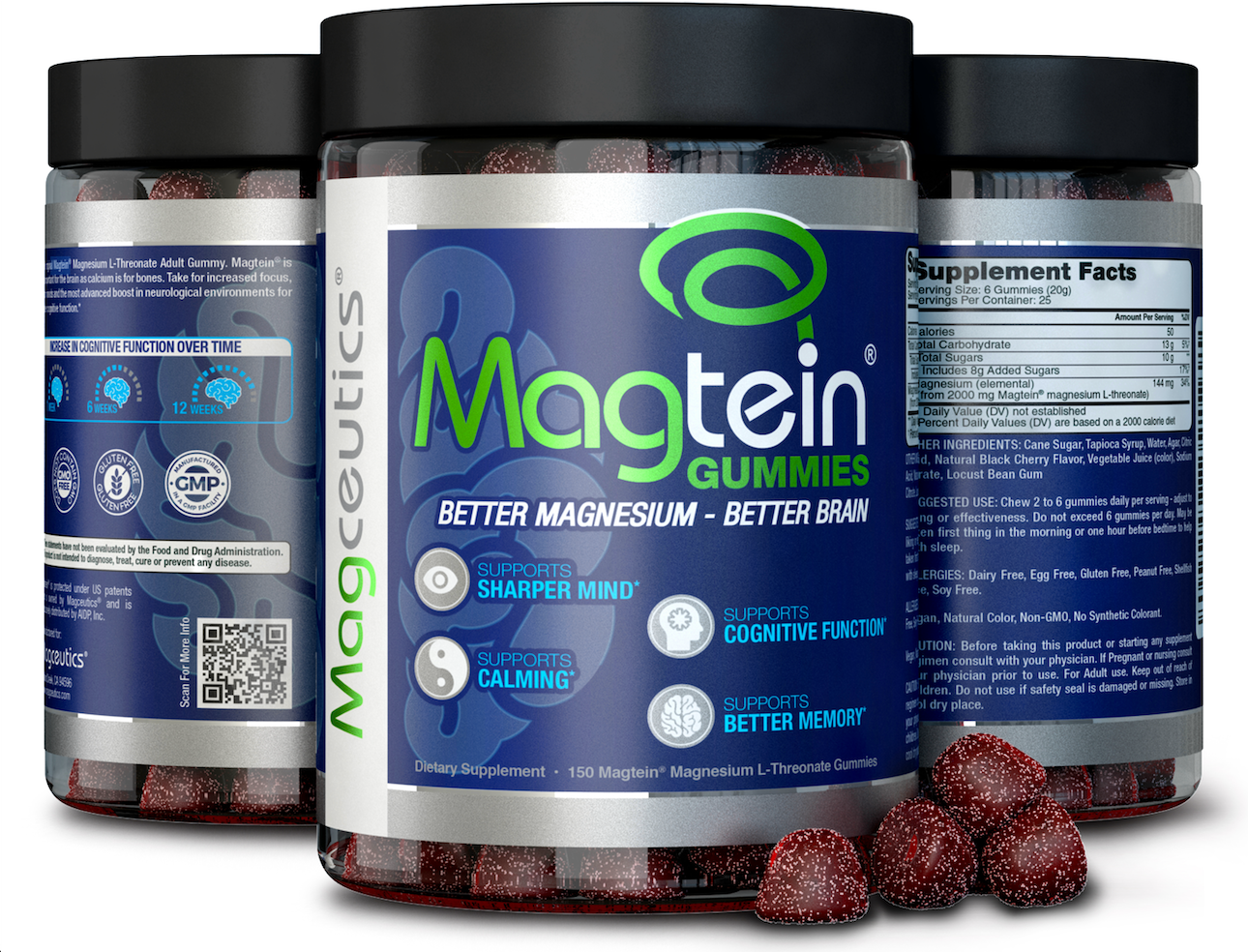
Magnesium L-threonate for memory is a breakthrough in brain health supplementation. This form, marketed as Magtein®, was specifically developed by neuroscientists to solve the blood-brain barrier problem.
Why it's different:
-
Only form proven to effectively cross the blood-brain barrier
-
Increases brain magnesium levels directly
-
Specifically studied for memory and cognitive benefits
-
Shows measurable improvements in both working and long-term memory
Research on magnesium L-threonate has demonstrated:
-
Improved working memory for daily tasks and problem-solving
-
Enhanced long-term memory formation and consolidation
-
Better learning ability and information retention
-
Potential reduction in age-related cognitive decline
Our Magtein original formula provides this brain-targeted magnesium in its patented form. For comprehensive support, MagteinPRO® combines magnesium L-threonate with magnesium acetyl taurate (ATA Mg®) for enhanced neurological benefits.
Most people notice improvements in memory and mental clarity within 4-8 weeks of consistent use with 1,500-2,000mg daily of magnesium L-threonate.
Magnesium: Brain Function Beyond Memory

The benefits of adequate magnesium for brain function extend beyond just memory:
Focus and Concentration: Magnesium helps maintain attention and filter distractions, supporting sustained concentration during demanding tasks.
Mental Clarity: Many people report reduced brain fog and sharper thinking when brain magnesium levels are optimized.
Stress Resilience: Magnesium helps regulate the stress response system, preventing chronic stress from damaging cognitive function.
Mood Stability: Through its effects on neurotransmitters, magnesium supports emotional balance, which in turn affects cognitive performance.
Our brain health collection offers various formulations specifically designed to support these cognitive functions through targeted nutrition.
When to Consider Magnesium for Memory
You might benefit from magnesium supplementation for memory if you:
-
Experience frequent forgetfulness or memory lapses
-
Have difficulty learning new information
-
Notice declining memory with age
-
Experience brain fog or mental fatigue
-
Have high stress levels
-
Take medications that deplete magnesium (proton pump inhibitors, diuretics)
-
Don't regularly eat magnesium-rich foods
While magnesium and memory research is compelling, it's important to maintain realistic expectations. Magnesium works best as part of a comprehensive brain health regimen that includes sleep, stress management, mental stimulation, and overall nutrition.
Supporting Your Memory Long-Term
Does magnesium help with memory? The evidence suggests it does, particularly when using brain-targeted forms like magnesium L-threonate that can actually increase magnesium levels in brain tissue where memory formation occurs.
By choosing the right form, using it consistently, and combining supplementation with healthy lifestyle practices, you're giving your brain the nutritional foundation it needs to maintain sharp memory and cognitive function.
Frequently Asked Questions
Does magnesium help with brain fog?
Yes, magnesium can help with brain fog, particularly brain-targeted forms like magnesium L-threonate. Many people report that brain fog lifts within 2-4 weeks of starting magnesium supplementation as neurotransmitter balance improves, brain cell energy production increases, and stress response normalizes. For comprehensive strategies, see our guide on the best supplements for brain fog.
Which magnesium is best for memory?
Magnesium L-threonate (Magtein®) is the best magnesium for memory because it's the only form proven to effectively cross the blood-brain barrier and increase brain magnesium levels. While other forms, such as magnesium glycinate, may help indirectly through better sleep or stress reduction, threonate directly supports brain tissue where memory formation occurs.
Can low magnesium cause forgetfulness?
Yes, low magnesium can cause forgetfulness through several mechanisms. Magnesium deficiency reduces synaptic density in brain regions crucial for memory, like the hippocampus, impairs your brain's ability to form new neural pathways for learning, and increases vulnerability to stress that damages memory function.