

Best Magnesium for Brain Health
You've heard magnesium is important for brain function, but when you search for supplements, you're confronted with a confusing array of options: glycinate, citrate, oxide, threonate. If you're wondering which form actually supports cognitive function, you're asking the right question. Not all magnesium supplements work the same way in your brain.
The best magnesium for brain health isn't just about elemental magnesium content. You need a supplement that can actually reach your brain tissue to support memory, focus, and overall cognitive function. Understanding the differences among magnesium forms will help you choose a formulation that delivers real brain health benefits rather than just general mineral supplementation.
Why Magnesium Matters for Your Brain
Before we get into the specific forms, it's helpful to understand why your brain needs magnesium. This essential mineral plays critical roles in brain function:
-
Supports neurotransmitter production and regulation
-
Helps maintain synaptic connections between brain cells
-
Regulates stress response through the HPA axis
-
Supports brain plasticity and learning
-
Protects neurons from oxidative stress
-
Helps regulate calcium flow in brain cells
When brain magnesium levels drop, you might experience brain fog, difficulty concentrating, poor memory, or increased stress reactivity. The challenge is that most magnesium supplements are ineffective at increasing brain magnesium levels.
The Blood-Brain Barrier Challenge
Here's the critical issue that makes the >question of which magnesium for brain health so important: your brain has a protective filter called the blood-brain barrier. This barrier prevents many substances in your bloodstream - including most forms of magnesium - from entering brain tissue.
Traditional magnesium supplements may raise magnesium levels in your blood and support muscles, bones, and digestion, but they don't efficiently increase magnesium where you need it most for cognitive function: inside brain cells!
This is why the form of magnesium matters so much for brain health, specifically.
Comparing Magnesium Forms for Brain Function
Magnesium L-Threonate (Magtein®): The Brain Specialist
The best magnesium for brain function discussions inevitably lead to magnesium L-threonate, marketed as Magtein®. This form was specifically developed by neuroscientists to address the blood-brain barrier challenge.
Why it stands out:
-
A unique form proven to effectively cross the blood-brain barrier
-
Increases brain magnesium levels directly
-
Specifically studied for cognitive benefits
-
Supports memory, learning, and focus
Research on magnesium L-threonate has shown benefits for:
-
Working memory and short-term recall
-
Long-term memory formation
-
Cognitive function during aging
-
Learning ability and information retention
-
Stress resilience and mood
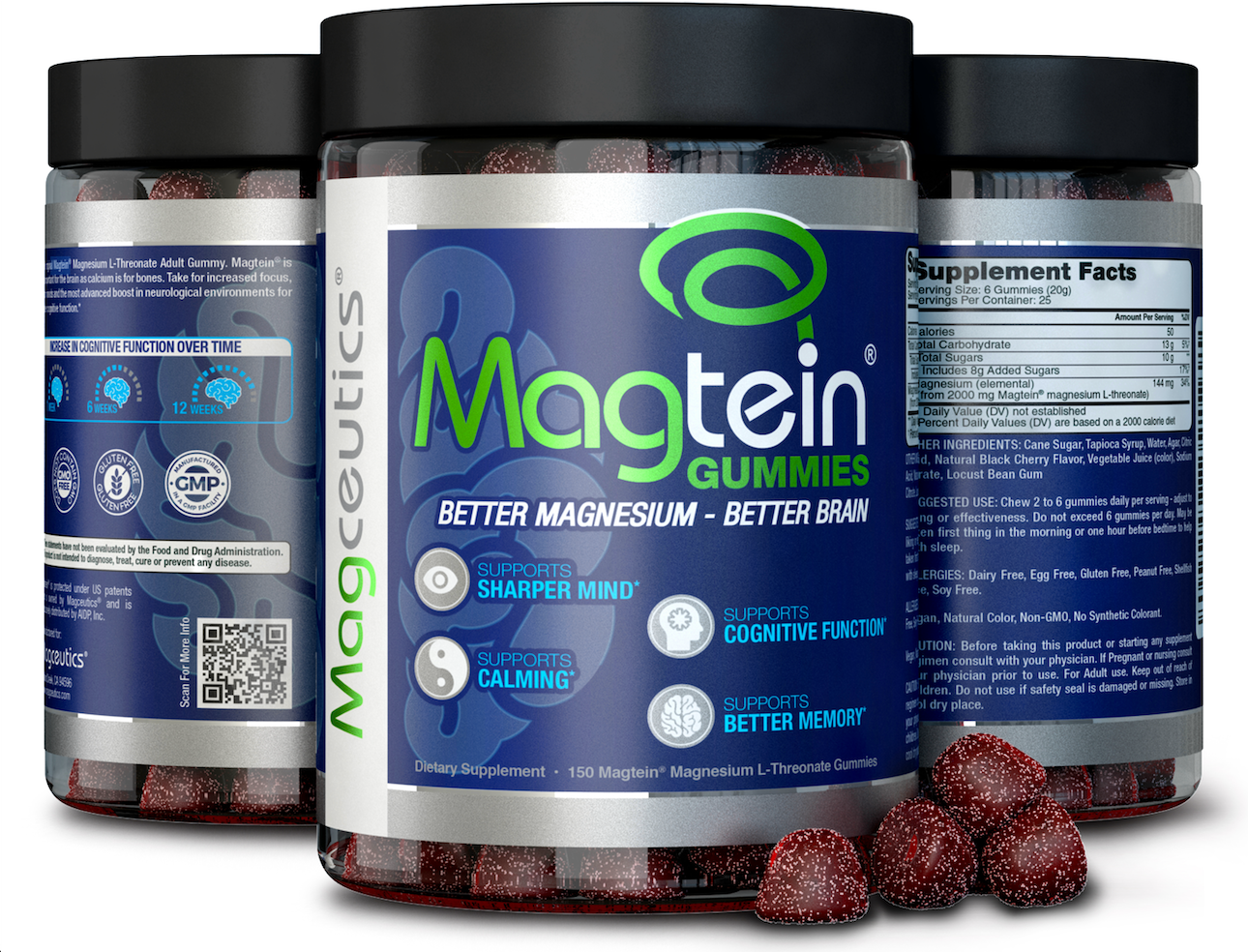
The Magtein® original formula provides this brain-targeted magnesium in its patented form, while the MagteinPRO® formula combines it with magnesium acetyl taurinate (ATA Mg®) for enhanced neurological support.
Magnesium Glycinate: The Calming Support
While not specifically brain-targeted, magnesium glycinate is worth noting for brain health due to its calming properties.
Benefits for brain function:
-
Well-absorbed and gentle on digestion
-
The glycine component has calming effects
-
Supports sleep quality (which benefits brain health)
-
Helps with stress-related cognitive issues
Limitations: Glycinate doesn't cross the blood-brain barrier as effectively as threonate, so while it supports overall calm that indirectly benefits cognitive function, it doesn't directly increase brain magnesium levels.
Best for: People whose brain fog or cognitive issues stem primarily from stress, anxiety, or poor sleep rather than direct nutritional deficits in brain tissue.
Magnesium Citrate: Limited Brain Benefits
Magnesium citrate is well absorbed and commonly used but offers minimal specific brain-health benefits.
Why it's not ideal for brain health:
-
Doesn't effectively cross the blood-brain barrier
-
Primary benefits are for digestion and general supplementation
-
No specific research supporting cognitive benefits
Magnesium Oxide: Not Recommended
With poor absorption (only about 4%), magnesium oxide provides minimal benefits for any body system, including the brain.
Magnesium Taurate: Emerging Interest
Magnesium bound to taurine may offer some brain benefits through taurine's neuroprotective properties, though it's not as well-studied as threonate for cognitive function specifically.
What Does Magnesium Do for the Brain?
What does magnesium do for the brain when levels are optimal? The benefits extend across multiple aspects of cognitive function:
Memory Enhancement
Adequate brain magnesium supports the formation of new memories and the retrieval of existing ones. The synaptic connections that store memories require magnesium for optimal function.
Stress Resilience
Magnesium helps regulate your stress response system, preventing chronic stress from damaging cognitive function. It modulates cortisol release and supports neurotransmitter balance during stressful periods.
Focus and Attention
Brain magnesium supports neural networks involved in sustained attention and distraction filtering. When levels are adequate, maintaining focus becomes easier and requires less effort.
Learning Capacity
Synaptic plasticity, your brain's ability to form new connections when learning, depends on adequate magnesium. Better brain magnesium levels correlate with improved learning ability.
Neuroprotection
Magnesium helps protect brain cells from oxidative stress and excitotoxicity, potentially supporting long-term brain health as you age.
Choosing the Best Magnesium Supplement for Brain Health

When shopping for a magnesium supplement, consider these factors:
Primary Goals
For cognitive enhancement and memory: Magnesium L-threonate (Magtein®) offers the most direct brain benefits with specific research supporting cognitive improvements.
For stress-related cognitive issues: Magnesium glycinate provides calming support that may help if stress is your primary cognitive challenge.
For comprehensive support: Some people use both forms: threonate for brain tissue and glycinate for overall stress management and sleep.
Quality Matters
Choose supplements with:
-
Patented forms like Magtein® for quality assurance
-
Third-party testing for purity
-
Appropriate dosing based on research
-
Minimal unnecessary additives
Our brain health collection provides various formulations specifically designed to support cognitive function through targeted nutritional support.
Consistency is Key
The best magnesium for the brain works over time. Most people notice initial improvements within 2-4 weeks, with more substantial cognitive benefits developing over 6-12 weeks of consistent daily use.
Real-World Results
Many people report noticeable improvements in cognitive function with brain-targeted magnesium supplementation. Our testimonials page shares experiences from customers who've incorporated Magtein® into their wellness routines.
Frequently Asked Questions
Is magnesium good for the brain?
Yes, magnesium is essential for healthy brain function. This mineral supports neurotransmitter production, synaptic connections between brain cells, stress response regulation, and neuroplasticity.
Which magnesium is best for brain health?
Magnesium L-threonate (Magtein®) is the best magnesium for the brain based on current research. This form was specifically developed to cross the blood-brain barrier and increase brain magnesium levels - something other forms struggle to do effectively. Clinical studies on magnesium L-threonate have demonstrated improvements in working memory, long-term memory, learning ability, and cognitive function.
What does magnesium do for the brain?
What magnesium does for the brain spans multiple critical functions. It supports the production and regulation of neurotransmitters that affect mood and cognition. Magnesium helps maintain synaptic plasticity, which is your brain's ability to form new connections when learning. It regulates calcium flow in neurons, which is essential for proper brain cell communication. The mineral also helps protect brain cells from oxidative stress and supports the stress response system to prevent cognitive impairment from chronic stress.


